Stories about feelings: why read them with your child?
Anger after losing a game, sadness when a friend won’t play, fear of the dark. Children feel these moments deeply, even when they can’t quite explain them. Reading together is an enjoyable way to help your child understand emotions and find words for them. All you need is an interesting story, your attention, and a little time without rushing.
1. Empathy: seeing through someone else’s eyes
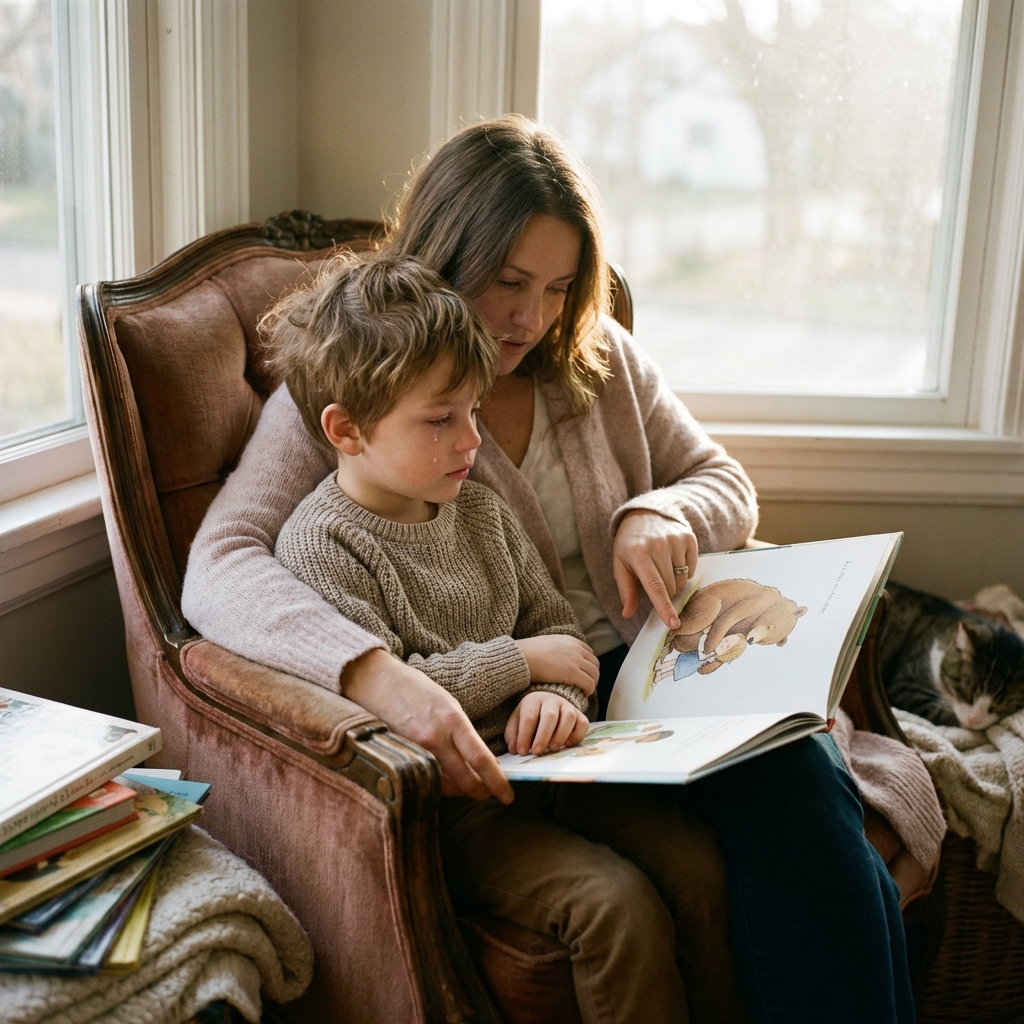
When a bear loses a favorite toy, you might ask, “How do you think he feels? What might help him?” Conversations like this give children practice in noticing other people’s feelings and needs. That’s an important part of empathy, useful in play, friendships, and family life. A story gives you a chance to think together about how to comfort or support someone.1
2. Naming and understanding feelings
“The bunny was disappointed because the rain spoiled his plans.” A sentence like this connects the name of a feeling with a particular situation. Stories offer words that help children talk about their own experiences. You might ask, “Remember when we couldn’t go to the playground? How did you feel?” Leave room for your child’s own answer.
In studies, preschoolers who talked about feelings after hearing stories did better on tasks measuring emotion understanding than children who heard the same stories without those conversations.2, 3 It’s worth making space for your child’s questions and observations.
3. Feeling safe and accepted
A story about a character who is afraid of the dark or jealous of a sibling can help a child feel less alone. It’s a good moment for a simple message: “You can tell me about the difficult things, too.” It also helps to separate feelings from behavior: it’s okay to feel angry, but it’s not okay to hit. Accepting an emotion doesn’t mean accepting harm.
4. Practical ideas for difficult moments
A character asks for help, cuddles a teddy bear, or takes a few slow breaths. These are ideas you can try together. Practice during a calm moment and see what suits your child. That way, a story becomes a starting point for learning to handle feelings. During a burst of intense anger, though, begin with safety and your calm presence; save the conversation for later.4
How can you read without turning it into a lesson?
- Match the story to your child. Look at faces in the pictures with a younger child; talk with an older one about why a character felt that way.
- Skip the quiz. One question and a thoughtful listen may be enough. If your child just wants to hear the story, that’s fine, too.
- Follow their reactions. Return to favorite passages, and pause or choose a different story if something feels upsetting.
Reading together is also time to be close. A cuddle, shared laughter, and your attentive listening show your child that their experiences matter. Even without a single question, that time together has value.
Looking for something to read together? Browse the Super Stories collection and choose a tale you both feel like reading.
Sources and further reading
-
ZERO TO THREE, How to Help Your Child Develop Empathy (guidance for parents). ↩
-
Grazzani and Ornaghi (2011), Emotional state talk and emotion understanding: a training study with preschool children, Journal of Child Language. ↩
-
Grazzani and Valle (2025), Training preschoolers with language games: enhancing theory of mind, emotion understanding, prosocial orientation, and language ability, European Journal of Developmental Psychology. ↩
-
Child Mind Institute, How to Help Children Calm Down (guidance for parents). ↩