The darker stories behind Disney's fairy tales

Many of us grew up with Disney’s animated classics. Snow White, Cinderella, and The Little Mermaid bring to mind magic, adventure, and that familiar promise of “happily ever after.”
But these stories began long before they reached the screen. Their roots lie in fairy tales, legends, and folk traditions written or collected by authors such as the Brothers Grimm, Hans Christian Andersen, and Charles Perrault. Those earlier versions can be very different from the films: darker, more violent, and full of stern moral lessons.
Here are five examples. These descriptions are for parents exploring the stories’ history, rather than bedtime reading for young children.
1. Snow White
Disney’s first feature-length animated film, released in 1937, draws on the Brothers Grimm tale. In the film, the Evil Queen falls from a cliff after lightning strikes. In the Grimm tale, her end is more deliberate and cruel: at Snow White and the prince’s wedding, she is forced to wear red-hot iron shoes and dance until she dies.
A kiss doesn’t wake Snow White in the familiar Grimm version, either. As servants carry her coffin away, a stumble dislodges the piece of poisoned apple from her throat.
2. The Little Mermaid
Disney’s The Little Mermaid tells a story of dreams and love that ends with Ariel marrying her prince. Hans Christian Andersen’s tale takes a much sadder path.
The mermaid trades her tail for legs, but every step hurts as though she is walking on sharp knives. The prince cares for her without falling in love and eventually marries another princess. The mermaid’s body dissolves into sea foam. The ending offers a different kind of hope: she becomes a daughter of the air, with a chance to gain an immortal soul through good deeds. There is no wedding with the prince.
3. Cinderella
Disney’s version owes much to Charles Perrault’s tale, with its fairy godmother and pumpkin carriage. The Brothers Grimm also recorded the story as Aschenputtel. There, birds associated with the tree at Cinderella’s mother’s grave help her instead of a fairy godmother.
The stepsisters’ fate is much harsher in that version. To make the golden slipper fit, one cuts off a toe and the other part of her heel. Blood reveals the deception. At Cinderella’s wedding, birds peck out the sisters’ eyes as punishment for their cruelty.
4. Sleeping Beauty
Both Perrault and the Grimms told versions of this tale. Disney’s film leaves out the troubling second part of Perrault’s story, where the wedding is far from the end.
The prince keeps his marriage secret from his mother, who comes from a family of ogres. After he becomes king and brings his wife to the castle, his mother tries to eat Sleeping Beauty and her children. A cook protects them by serving animal meat instead. The queen mother eventually dies in a vat filled with snakes and toads.
5. Tangled and Rapunzel
The Grimms’ Rapunzel is also darker than Disney’s Tangled. When the enchantress discovers Rapunzel’s relationship with the prince, she cuts off Rapunzel’s hair and sends her into the wilderness. The prince climbs the severed hair to the tower, only to find the enchantress waiting. In despair, he jumps and lands in thorns that blind him. He wanders for years before finding Rapunzel, whose tears restore his sight.
Why were the earlier tales so dark?
Old fairy tales weren’t simply gentle bedtime entertainment. Many warned listeners about danger or presented a world in which kindness was rewarded and wrongdoing harshly punished. That helps explain their severe endings, without making every version suitable for every child.
Rediscover the classics with Super Stories
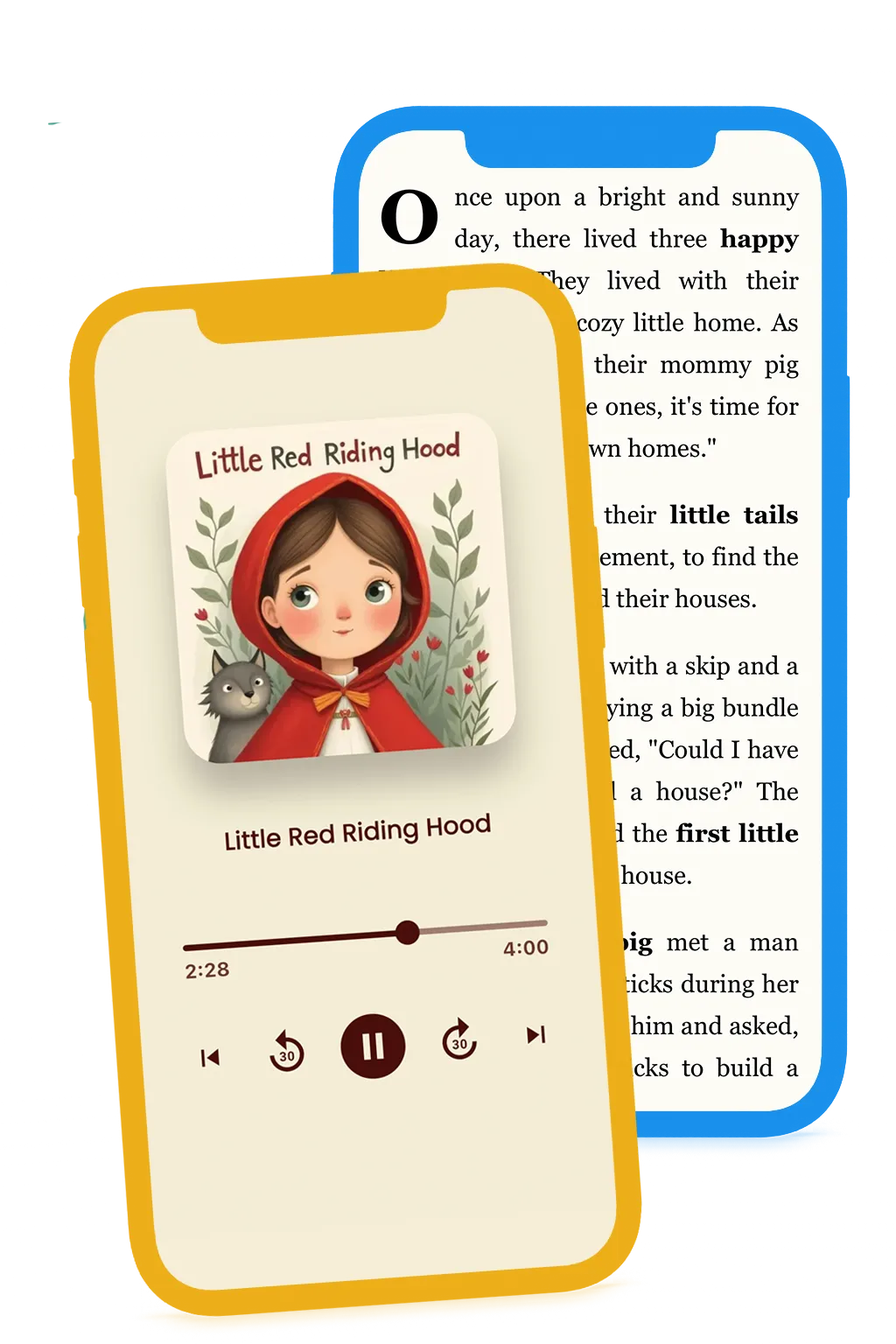
In Super Stories, you’ll find our adaptations of Cinderella, Snow White, and The Little Mermaid, without the graphic elements of the older tales.
If your child enjoys Disney films, reading or listening together is another way to meet familiar characters beyond the screen.
Explore classic tales in Super Stories.