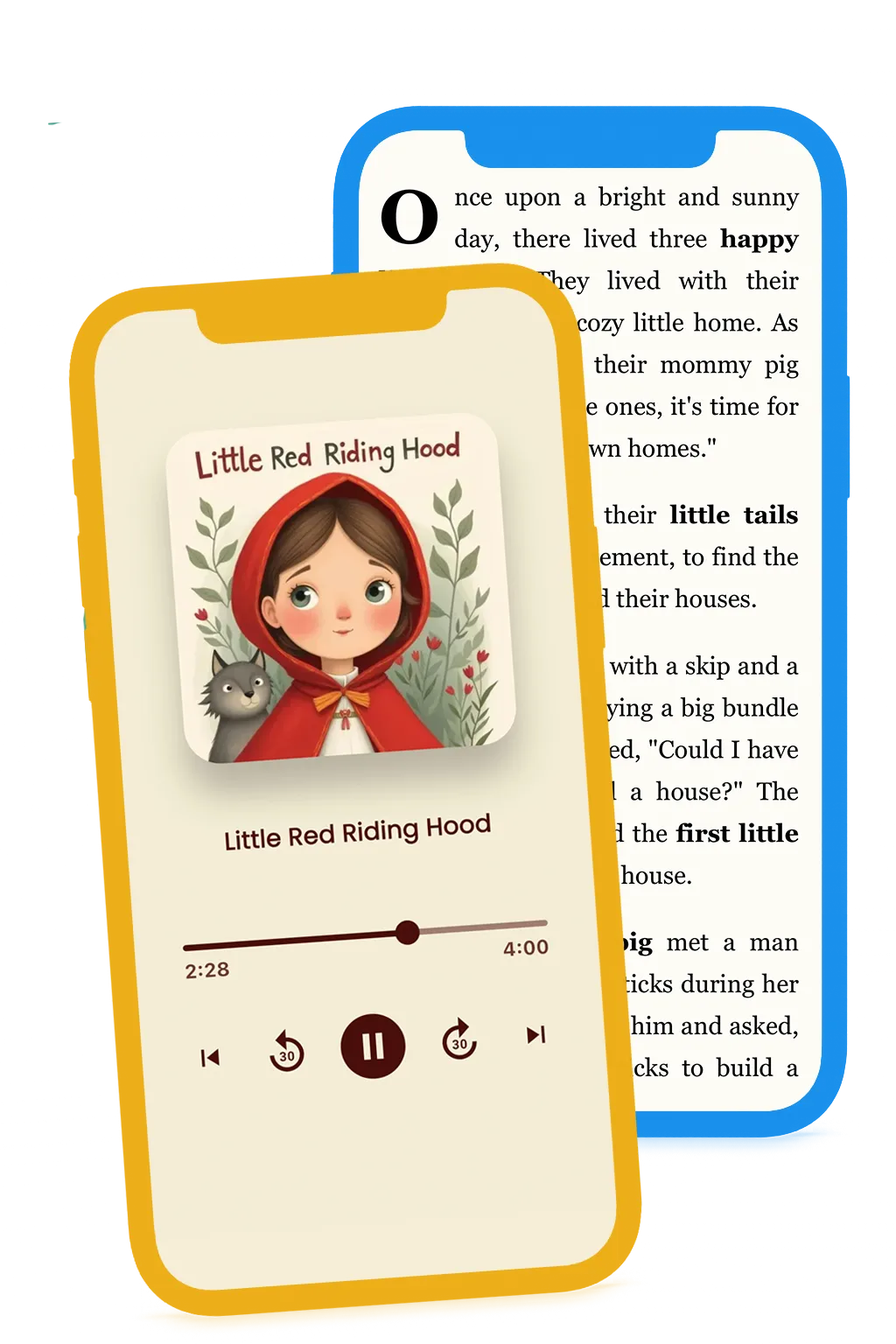
Audiobooks for children: enjoying stories without watching a screen

A long journey, a quiet afternoon, or an evening when you haven’t the energy to read another tale? Audiobooks let children enjoy a story without watching a screen. They’re more than something to fill the time: a well-chosen story can introduce new words, invite imagination, and give you something new to talk about together.
What can children gain from listening to stories?
1. New words and a feel for language
Stories contain words we rarely use over breakfast or while getting dressed. Children hear them in context and get to know their sounds and the rhythm of sentences. When your child asks, “What does that mean?”, pause for a short explanation. A study with school-age children also found that audiobooks paired with displayed text helped children learn words from those books.1
2. Enjoying stories before reading feels easy
A child who is still learning to sound out words may already enjoy following a longer adventure. A research review suggests that younger schoolchildren may understand a text better when listening than when reading it independently.2 An audiobook lets them focus on the characters and plot without the effort of decoding every word. It’s a chance to enjoy the world of books even when reading is difficult.
3. Room for imagination and feelings
What does the dragon’s cave look like? What kind of hat does the fox wear? A story without ready-made pictures leaves room for your own ideas. After listening, you could draw a favorite scene or imagine a different ending. And “Why was the bear afraid?” can open a conversation about feelings, including ones your child knows well.
4. A chance to listen closely
Following an adventure invites children to focus on a voice, remember events, and guess what happens next. Start with a short story and gradually offer longer ones. This is an enjoyable way to practice listening, not a concentration test. If your little one loses interest, take a break.
How do you choose a good audiobook for your child?
- Follow their age and interests. Short stories with simple plots are a good starting point. An animal lover may prefer a woodland adventure to a topic that doesn’t interest them.
- Listen to a sample together. Look for a clear voice, an easy-to-follow pace, and a narrator your child enjoys.
- Match the effects to the mood. Forest sounds or animal noises can add charm, but shouldn’t drown out the narration or upset your child. Choose a quieter recording before bed.
- Look for convenient playback. Pausing, skipping back easily, and playing with the screen off make everyday listening simpler. A sleep timer can be useful in the evening, too.
A small ritual to enjoy
A gentle story can be a pleasant way to end the day. If it leaves your child lively rather than settled, try listening earlier. Not every story needs to end with questions or a task. Sometimes it’s enough to cuddle up and listen together.
Look after little ears, too: keep the volume low and take breaks. At home, you can use a speaker; with headphones, consider enabling a volume limit.3
Audiobooks and paper books complement each other. Listening alone doesn’t replace practicing how to read words, but it does let children enjoy stories. Leave room for looking at illustrations, reading together, and conversation as well.
In Super Stories, you’ll find tales to listen to and read together. Choose one that feels right for today.
Sources and further reading
-
Olson et al. (2026), Remote Text-Supplemented Audiobook Intervention Supports Children’s Explicit and Incidental Vocabulary Learning, Developmental Science. A study of children aged 8-10; it involved recordings with text, not audio alone. ↩
-
Singh and Alexander (2022), Audiobooks, Print, and Comprehension: What We Know and What We Need to Know, Educational Psychology Review. A review of 32 publications on listening, reading, and comprehension. ↩
-
World Health Organization (WHO), Deafness and hearing loss: Safe listening. Guidance on volume, headphones, and listening breaks. ↩